
- English
- Living in Japan
- Japanese Lessons
- Beyond Halloween: The year-round spirits of Japanese folklore (October 2026)
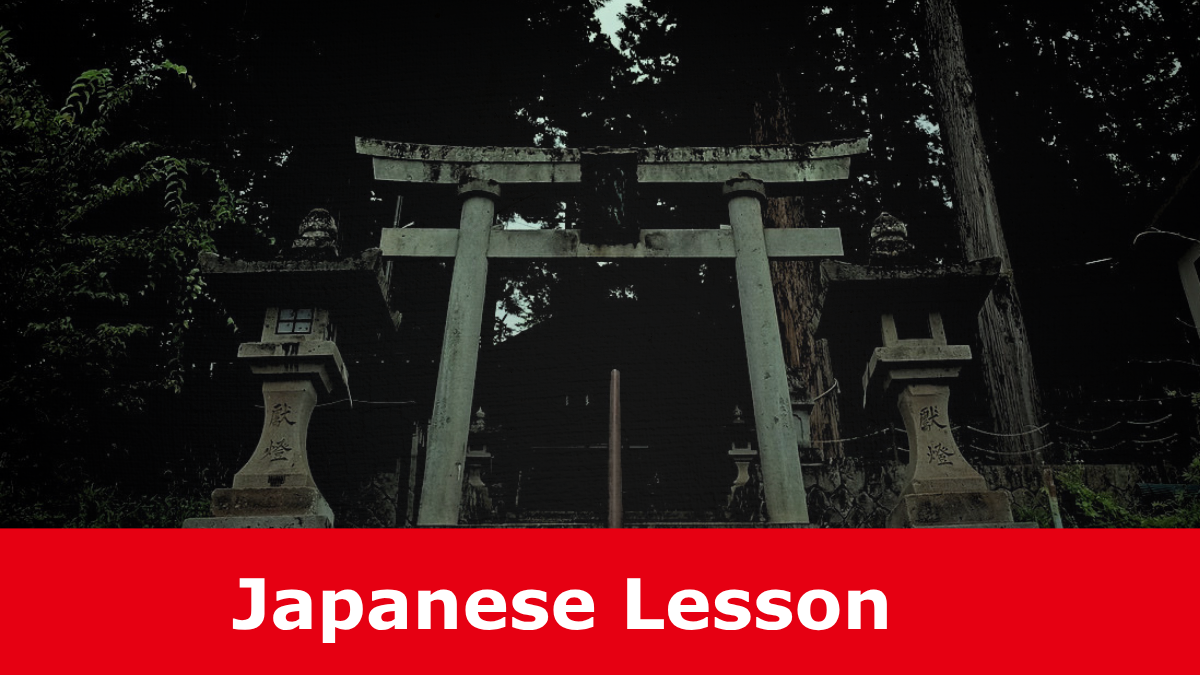
Each month, we share Japanese language or cultural insights to help you navigate daily life in Japan with confidence. Find more resources for living in Japan.
Japanese Lesson: Beyond Halloween – the year-round spirits of Japanese folklore
When we think of Halloween, images of frightening ghouls, carved pumpkins, and jump scares come to mind. In contrast, Japan often conjures images of kawaii (cute) culture. But what about the darker side of Japanese folklore? What about the ghosts, demons, and supernatural beings that lurk in the shadows?
In this month’s Japanese lesson, we dive into the world of yokai (妖怪 / ようかい).
Yokai encompass a vast spectrum of entities, ranging from shapeshifters and wandering spirits to demonic beasts and mischievous tricksters. Crucially, yokai are not inherently evil in Japanese folklore – while some are dangerous, others are protective or simply playful. At their core, yokai embody the mysteries of nature and human emotion in uncanny, unforgettable ways.
Key classifications of the supernatural
While yokai serves as the broad umbrella term, folklore distinguishes several specific categories:
- Ayakashi (妖 / あやかし): Originally used to describe mysterious phenomena and sea-dwelling spirits that appear above the water's surface, this term is also widely used in classic literature as a synonym for bizarre apparitions.
- Mononoke (物の怪 / もののけ): A classical term referring to spirits or forces believed to cause inexplicable occurrences, possessions, illnesses, and misfortune. Within this realm, you will find:
- Onryo (怨霊 / おんりょう): Vengeful spirits. A form of ghost (yurei / 幽霊 / ゆうれい) driven by wrath to torment their enemies, spread curses, or trigger disasters to avenge wrongs suffered in life.
- Shiryo (死霊 / しりょう): Spirits of the deceased. Often associated with tatari (祟り / たたり), a spiritual retribution or curse brought upon the living.
- Ikiryo (生霊 / いきりょう): Living ghosts. Also historically called ikisudama (いきすだま), this is a soul that temporarily detaches from a living person's body – often driven by intense jealousy, love, or hatred – to haunt someone elsewhere.
- Mamono (魔物 / まもの): Translated as "demons" or "malevolent beasts." Unlike benign yokai, mamono explicitly emphasizes harmful, sinister intent. Historically, they were viewed as monstrous perils waiting in deep mountain ravines, dense forests, or stormy waters.
How folklore categorizes phenomena
In the landmark folklore reference Sogo Nihon Minzoku Goi (綜合日本民俗語彙 / A Complete Dictionary of Japanese Folklore), folklorist Kunio Yanagita and his peers noted that mysterious occurrences (ke / 怪 / け) were often cataloged by the element or environment they originated from:
- Dobutsu no ke (動物の怪): Animal phenomena (both real animals like tanuki and foxes, and mythical beasts)
- Ki no ke (木の怪): Tree and plant spirits
- Michi no ke (道の怪): Road and crossroad apparitions
- Mizu no ke (水の怪): Freshwater phenomena
- Oto no ke (音の怪): Mysterious sounds (footsteps, tapping, or unexplained echoes)
- Umi no ke (海の怪): Ocean and sea encounters