
- English
- Living in Japan
- Japanese Lessons
- Moons and rabbits – Otsukimi in Japan (September 2026)
Each month, we share Japanese language or cultural insights to help you navigate daily life in Japan with confidence. Find more resources for living in Japan.
Japanese Lesson: Moons and rabbits – Otsukimi in Japan
Every year, starting around the end of August, stores and food shops across Japan fill up with moon and rabbit motifs. Menus begin featuring dishes where a golden egg yolk takes center stage, and seasonal merchandise suddenly showcases rabbits gazing at the moon or sitting beside stacked piles of round treats.
We would like to share a bit more about these autumn festivities, explain the connection behind the rabbits and the moon, and highlight a few essential Japanese words to look out for this season.
Tsukimi or Otsukimi (月見・お月見 / つきみ・おつきみ) literally means "moon viewing." These traditional festivals honor the autumn moon, originating as a Japanese variation of China’s Mid-Autumn Festival (or Mooncake Festival).
Because Tsukimi follows the lunar calendar, the date changes every year. Here are a few key details and vocabulary words to keep an eye out for if you would like to experience this unique tradition while in Japan:
- Tsukimi / Otsukimi (月見・お月見 / つきみ・おつきみ):
Literal meaning: Moon viewing.
In context: The traditional Japanese harvest festival celebrating the beauty of the autumn moon. - Jūgoya (十五夜 / じゅうごや):
Literal meaning: Fifteenth night.
In context: The night of the traditional harvest full moon, celebrated on the 15th day of the 8th lunar month. In 2026, Jūgoya fell on September 25. - Jūsan'ya (十三夜 / じゅうさんや):
Literal meaning: Thirteenth night.
In context: A second moon-viewing night honoring the waxing moon on the 13th day of the 9th lunar month. In 2026, it falls on Friday, October 23. - Tsuki no Usagi (月のウサギ / 兎):
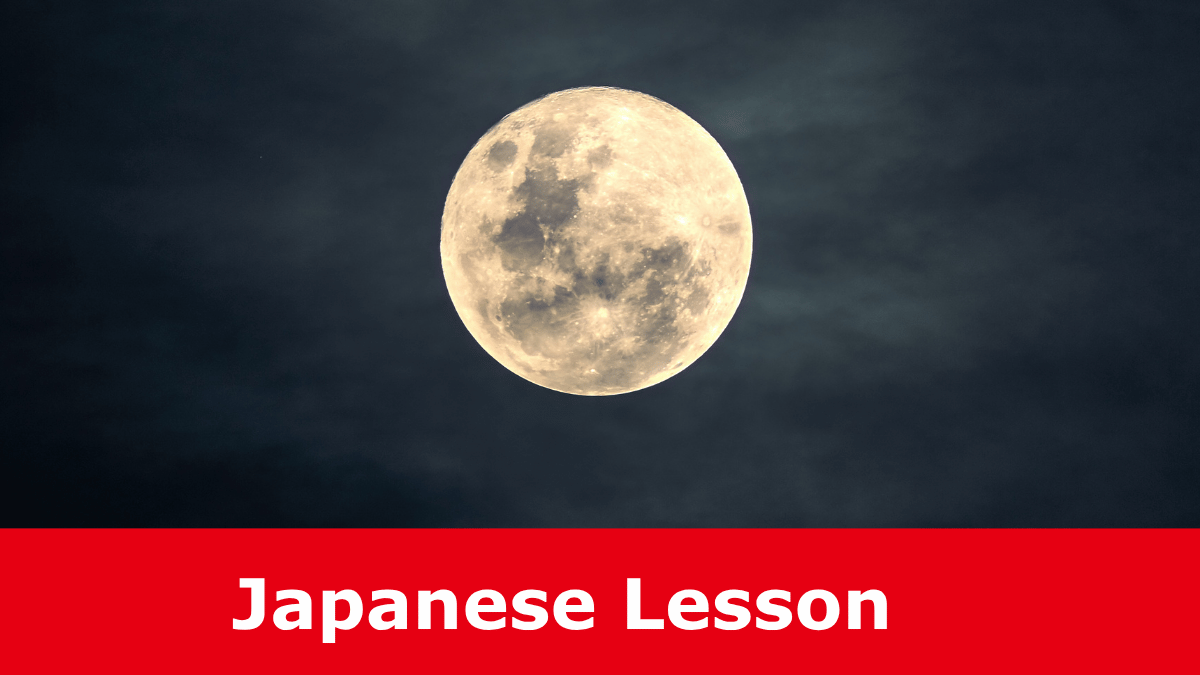
One of the most beloved aspects of Tsukimi is the story of the moon rabbit. According to Asian folklore, a rabbit lives on the moon, pounding rice to make mochi. The legend tells of a selfless rabbit who offered itself to a hungry traveler. The traveler, secretly a divine deity, honored the rabbit's sacrifice by placing its image on the surface of the moon. Today, people in Japan still point out the outline of a rabbit on the full moon. This legend explains why mochi, especially round white rice dumplings called tsukimi dango, plays such a central role in the festivities.
On the evening of the full moon, it is customary to gather where the moon can be clearly seen, decorate the setting with Japanese pampas grass, and enjoy traditional dishes. Here are a few seasonal staples you will come across:
- Tsukimi ryōri (月見料理 / つきみりょうり):
Literal meaning: Moon-viewing cuisine.
In context: Seasonal dishes and offerings displayed to celebrate the beauty of the moon and express gratitude for a bountiful harvest. - Tsukimi dango (月見団子・月見だんご / つきみだんご):
Literal meaning: Moon-viewing dumplings.
In context: Small, round white rice dumplings arranged in a pyramid (traditionally 15 dango for Jūgoya). Offered to the full moon to give thanks and pray for future prosperity. - Mochi (もち):
A traditional Japanese rice cake made from short-grain glutinous rice (mochigome), steamed and pounded into a soft, chewy texture. - Satsumaimo (薩摩芋 / さつまいも / サツマイモ):
Literal meaning: Sweet potato. Alongside tsukimi dango and pampas grass, root vegetables like sweet potatoes and taro are placed on traditional altars as seasonal offerings. - Susuki (すすき / 薄 / 芒):
Literal meaning: Japanese pampas grass (silvergrass).
In context: A central decoration representing heavy rice stalks ready for harvest; traditional beliefs also hold that susuki wards off evil spirits.
Whether you're in Japan visiting a local shrine event or simply enjoying a warm night outside, Tsukimi is all about taking a moment to slow down and appreciate the changing seasons. Keep an eye out for "Tsukimi" specials at local bakeries, fast-food chains, and convenience stores, as many serve limited-edition items topped with a fried egg to mirror the full moon!
Also, next time you look up at the night sky this autumn, see if you can spot the tsuki no usagi making mochi!